
Most ordinary toilet clogs clear with a flange plunger. Make sure the bowl has enough water to cover the plunger cup, lower the plunger at an angle so it fills with water, press gently to establish a seal, then use 10 to 15 firm push-and-pull strokes. If that does not work after two or three rounds, move to a toilet auger or call a plumber.
First: stop the toilet from overflowing
- Do not flush again.
- If water is still entering the bowl, lift the tank lid and press the rubber flapper closed.
- Turn the shutoff valve behind or beside the toilet clockwise until it stops.
- Protect the floor with old towels and put on waterproof gloves.
Why Toilets Clog
A toilet’s built-in trap is designed to hold water while allowing waste and toilet paper to pass. A clog forms when too much material enters at once, an object catches in the trap or the drain line beyond the toilet is partly blocked.
Common causes include:
- Too much toilet paper in one flush
- Wipes, including products labeled “flushable”
- Paper towels, cotton swabs, dental floss and sanitary products
- Toys, phones and other solid objects
- A weak flush caused by low tank water or a toilet that needs repair
- A partial blockage farther down the branch drain or main sewer line
A one-time paper clog is usually a local problem. A toilet that clogs repeatedly—or a toilet clog accompanied by slow tubs, gurgling drains or backups elsewhere—can point to a larger drain-line issue.
How to Unclog a Toilet: Five Methods
1. Use a Flange Plunger
A flange plunger has a soft rubber sleeve extending below its cup. That sleeve fits into the toilet outlet and creates a better seal than the flat cup plunger commonly used on sinks.
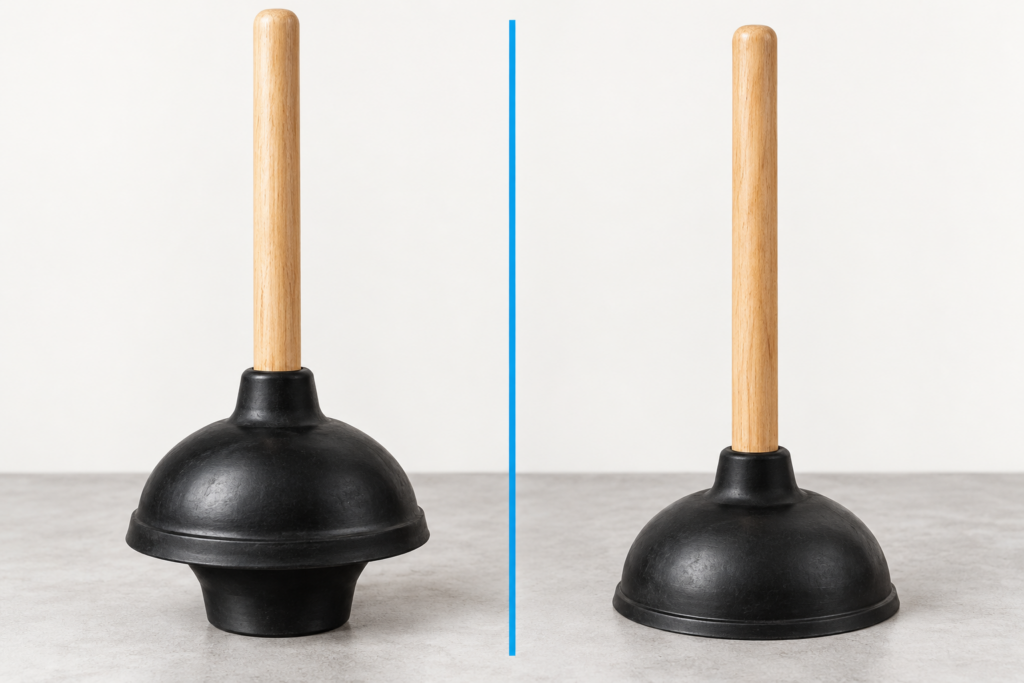
- Adjust the bowl water. The water should cover the rubber cup. Add water from a bucket if it is too low, or remove some if it is close to the rim.
- Soften the rubber. Run the plunger under warm water for a few seconds.
- Fill the cup with water. Lower it into the bowl at an angle so you are pushing water—not compressed air—toward the clog.
- Make a seal. Fit the flange into the drain opening and begin with a gentle downward stroke to avoid splashing.
- Plunge without breaking the seal. Use 10 to 15 firm push-and-pull strokes.
- Test carefully. If the bowl drains, restore the water supply and flush once with your hand ready to close the flapper.
Try two or three rounds. If the water level does not move at all, stop before repeated force damages the toilet’s seal or pushes a solid object deeper.
2. Let a Paper Clog Soften
If the water level is slowly falling and you know the clog contains only toilet paper and waste, wait 15 to 30 minutes before plunging again. The paper may soften enough to break apart. Do not use this method when a solid object or wipes may be involved, and do not leave a nearly overflowing toilet unattended.
3. Try Dish Soap and Warm Water
For a soft organic clog, add about ¼ cup of liquid dish soap to the bowl. Follow it with roughly half a gallon of warm water, poured slowly so the bowl cannot overflow. Wait 10 to 20 minutes, then plunge again.
Use warm water—not boiling water. A sudden temperature change can damage porcelain. This method will not remove a toy, wipes or another solid obstruction.
4. Remove a Visible Object
If an object is clearly visible and within easy reach, shut off the toilet’s water, put on waterproof gloves and lift it out by hand or with a suitable gripping tool. Do not reach into the trap when you cannot see the object, and do not use a wire coat hanger; metal can scratch the porcelain or push the object farther into the toilet.
5. Use a Toilet Auger
A toilet auger, also called a closet auger, is designed for a stubborn clog in the toilet trap. Its short cable runs through a bent guide tube, and a protective sleeve helps keep the cable from scraping the bowl.
- Retract the cable into the guide tube.
- Place the curved end in the toilet outlet with the protective sleeve against the porcelain.
- Turn the handle clockwise while feeding the cable into the trap.
- When you feel resistance, continue turning gently to break up or retrieve the obstruction.
- Withdraw the cable slowly, then test the toilet carefully.
Stop if the auger binds, if you suspect a hard object is wedged in the trap or if you are not comfortable using the tool. Forcing the cable can damage the toilet.
What Not to Do With a Clogged Toilet
- Do not keep flushing. Each flush can add more water to a bowl that cannot drain.
- Do not pour boiling water into the bowl.
- Do not use a wire coat hanger. It can scratch the porcelain and push an object deeper.
- Do not use chemical drain openers. They are not a reliable solution for objects or dense toilet clogs, can expose you or a plumber to caustic material and must never be mixed with other cleaners.
- Do not remove the toilet unless you know how to reset and reseal it correctly. A poor seal can leak wastewater around the base.
How Plumbers Unclog Toilets
A plumber first determines whether the blockage is in the toilet, the nearby branch drain or the building’s main drain. Depending on the symptoms and location, the work may include:
- Using a professional flange plunger or toilet auger
- Removing the toilet to retrieve an object or reach the drain from the floor opening
- Running drain-cleaning equipment through an appropriate access point
- Performing a video line inspection when recurring symptoms suggest damage or an obstruction farther down the line
- Recommending sewer and drain cleaning when more than one fixture is affected
The right method depends on the location and cause of the clog. A camera is useful for inspecting a cleared or partially open drain line, but it is not a substitute for first establishing access through a completely blocked line.
When to Call a Plumber
Call B&L Plumbing Service when:
- The toilet remains clogged after proper plunging and a careful auger attempt
- The toilet clogs every time you flush or several times a week
- Water rises in the tub or shower when the toilet flushes
- Several drains are slow, gurgling or backing up
- A solid object went into the toilet
- Water leaks around the toilet base
- You smell sewage indoors or outside
When several fixtures are affected at once, reduce water use until the problem is checked. The blockage may be in the main drain rather than the toilet itself; review the warning signs and safety limits in our main line snake guide. If the toilet is cracked, leaking, loose or flushing poorly, B&L also provides toilet repair and installation.
How to Prevent Another Toilet Clog
- Flush only human waste and toilet paper.
- Put wipes—even “flushable” wipes—paper towels, floss and hygiene products in the trash.
- Use less paper per flush, or split a large amount between two flushes.
- Keep a flange plunger in each bathroom.
- Check that the tank fills to the manufacturer’s marked water line; do not guess at a universal setting.
- Have repeated clogs diagnosed instead of treating each one as an isolated blockage.
Still Dealing With a Clogged Toilet?
B&L Plumbing Service handles toilet clogs, repairs and main-drain problems throughout the Kansas City metro.
Frequently Asked Questions About Unclogging a Toilet
If I keep flushing the toilet, will it unclog?
Usually not. If the bowl is not draining, another flush can make it overflow. Stop flushing, close the toilet’s shutoff valve if the water is rising and clear the clog before testing one careful flush.
What can I pour down my toilet to unclog it?
For a soft paper-and-waste clog, dish soap followed by warm—not boiling—water may help. Avoid chemical drain openers, and never mix drain chemicals with other cleaners.
What is the quickest way to unclog a toilet?
For most ordinary clogs, use a flange plunger with enough water to cover the rubber cup. Start gently to establish a seal, then use firm push-and-pull strokes without breaking that seal.
Will a toilet unclog itself?
A clog made only of toilet paper and waste may soften as it sits, especially if the water level is slowly falling. Wipes, paper towels and solid objects are unlikely to clear on their own.
Why does my toilet clog every time I flush?
Possible causes include a partial blockage in the toilet trap or drain, a foreign object, low tank water or a problem farther down the drain line. Repeated clogs need diagnosis rather than repeated plunging alone.
What should I do if I cannot unclog my toilet?
Stop using the toilet, close its shutoff valve if needed and call a plumber. If several fixtures are slow, gurgling or backing up, limit water use because the problem may be in the main drain.
Related toilet guides: If clogs keep returning, compare other common toilet problems. Water around the fixture or unexplained tank cycling may require toilet-leak diagnosis.

